Services

Solar PV inspection. One delivery discipline.

Utility and rooftop solar PV thermography (#solar). A five-stage procedure (#procedure), a fixed severity-ranked output format, fixed turnarounds.
Jump to · Procedure Jump to · Equipment
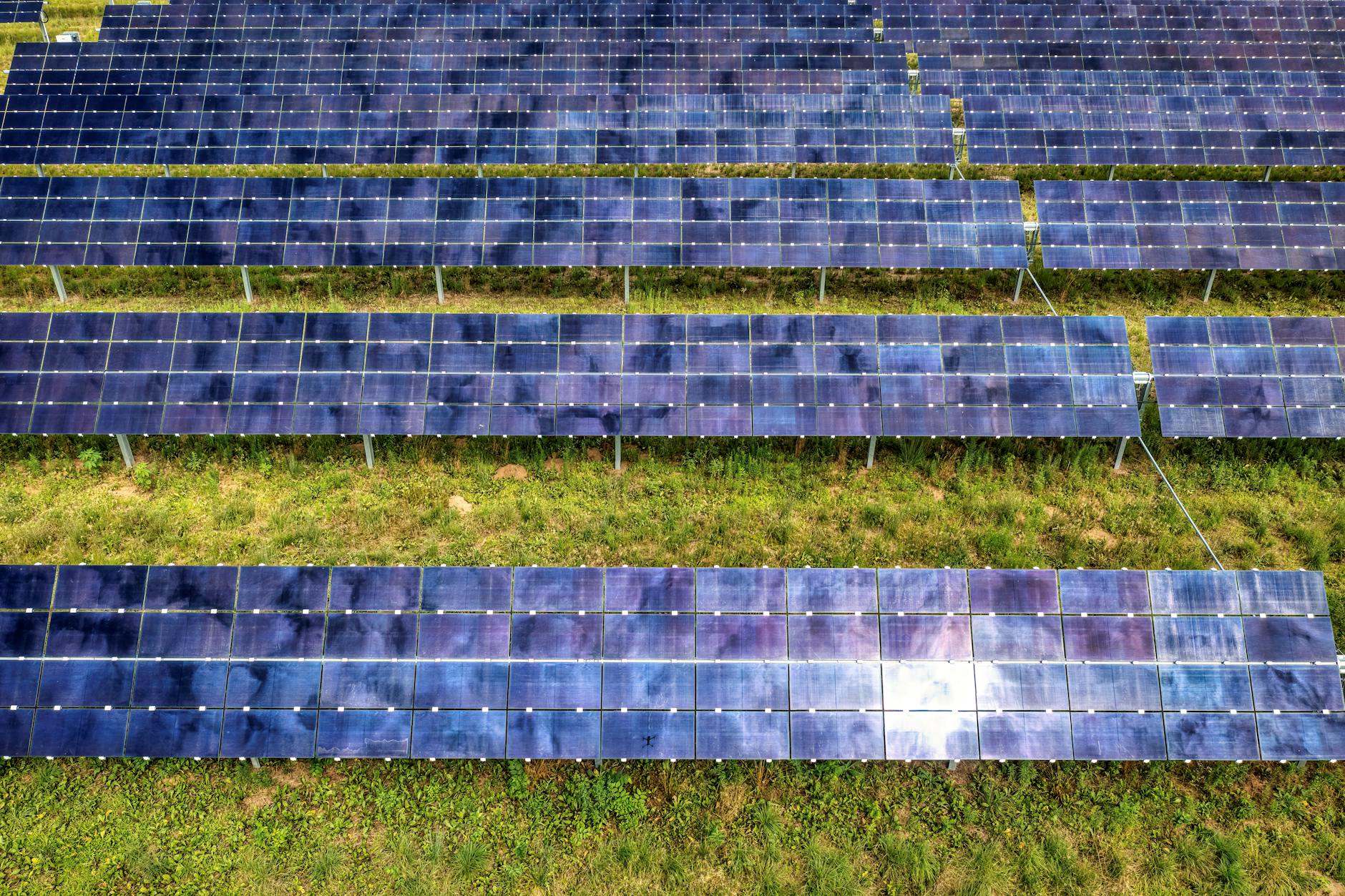
Thermal pass over a utility-scale ground-mount solar array thermal pass · 30–40 m AGL · 9.3 MWp ground-mount
§ 01 · Solar PV

Solar PV inspection

Thermographic survey of crystalline-silicon arrays. Two-pass capture: nadir thermal at 30–40 m AGL for anomaly mapping, oblique RGB for context and module-ID confirmation. Anomalies classified by ΔT against ambient and string-baseline, severity-ranked S1–S4, returned as GeoJSON tied to module geometry.

Standard reference: IEC TS 62446-3 for thermography, IEC 61724-1 for environmental conditions during the flight window.

Open Cat A3 ≤ 5 MWp · single-day String-level resolution
Solar inspection procedure

How a flight runs, end to end.

Compliant with IEC TS 62446-3 (outdoor IR thermography of PV) and IEC 61724-1 (PV performance monitoring). EU 2019/947 Open Category A1/A3. GDPR-compliant data handling — site imagery stored encrypted, deleted on client request.

01 Pre-flight planning remote · 1–3 days before
  • Site briefing call — plant layout, MW, string/inverter map, access, on-site contact.
  • Review of prior reports and current performance-ratio anomalies, if available.
  • Flight window scheduled for clear-sky conditions, irradiance ≥ 600 W/m² (IEC TS 62446-3 minimum).
  • NOTAM / airspace clearance filed with Slovenia CAA (or competent authority for IT, ES, SI, AT or HR).
  • Operator registration, A1/A3 certificate, €1M liability and hull cover verified for the flight date.
  • Pre-flight checklist sent to client: gate access, livestock notice, inverter status, on-site duration.
02 On-site setup 30–45 min
  • Site walk with plant contact; confirmation that all strings are energised and inverters operational.
  • Irradiance measurement with calibrated pyranometer / reference cell — logged for the report.
  • Ambient temperature, wind speed, cloud cover recorded.
  • Mission upload: automated grid pattern, ~30–40 m AGL, nadir orientation, 80% front / 70% side overlap.
  • Safety perimeter established; ground crew briefed.
03 Aerial thermal + RGB capture 1-2 hours / 5 MW
  • DJI Mavic 3 Thermal — radiometric thermal (640×512, ±2 °C) + 4/3 CMOS RGB, synchronised capture.
  • Automated mission with manual override available.
  • Live anomaly check on a second screen; obvious hotspots flagged for a low-altitude verification pass.
  • Coverage of full array plus combiner boxes, inverter housings, and transformer enclosures where line-of-sight permits.
  • Battery swaps pre-planned to avoid interrupting a string row mid-capture.
04 Post-processing and analysis 3–5 working days
  • Radiometric mosaic stitched in DJI Terra / DroneDeploy.
  • Anomaly classification per IEC TS 62446-3:
    • Category 1 — single cell / hotspot (ΔT 5–20 °C)
    • Category 2 — multi-cell / substring fault
    • Category 3 — full module / bypass diode / disconnected string
    • Category 4 — junction box, connector, or interconnect fault
  • Each defect geo-tagged, photographed (thermal + RGB), and cross-referenced to string ID.
  • Severity prioritisation: critical (immediate revenue / safety impact), major (within 30 days), minor (next maintenance cycle).
  • Operator QC pass before report release.
05 Deliverables
  • PDF report — executive summary, methodology, weather log, full defect list with images, severity ranking, recommended action.
  • Interactive web map — clickable defects with thermal + RGB images and GPS coordinates.
  • CSV / GeoJSON export of all anomalies for CMMS / SCADA integration.
  • High-resolution orthomosaic (RGB + thermal) on request.
  • Raw radiometric data available for client archival.
06 Follow-up
  • 30-minute debrief call to walk through findings and prioritisation.
  • Optional re-inspection of repaired defects.
  • Annual or semi-annual cadence available under framework retainer.

Typical timelines

Plant sizeOn-siteReport delivery
Up to 1 MW2–3 h3 working days
1–5 MW4–8 h4 working days
5–20 MW1-2 days5 working days
20 MW+2–4 days7–10 working days
Equipment

Standard plus a named upgrade path.

One aircraft on day one. The upgrade unit isn't on a shelf — it's named so you can see how the operation scales without surprise.

Standard equipment · day-1

DJI Mavic 3 Thermal

Open Cat A3
  • ClassEU C1 · CE marked
  • Thermal640 × 512 · ±2 °C · radiometric
  • RGB4/3 CMOS · synchronised
  • MTOWSub-1 kg · transponder-equipped
  • Operator weight classBelow 25 kg, Open A3 compliant
Upgrade path · on request

DJI Matrice 400 · Zenmuse H30T

Specific Cat
  • ClassSpecific Cat · declaration
  • ThermalH30T · 1280 × 1024 · radiometric
  • RGBZoom 34× · wide + tele
  • MTOWHeavy-lift · dual-payload
  • Lead timeQuoted per site · 2–3 wk planning
Pilot project

First inspection at-cost, before you commit a portfolio.

A single site, scoped end-to-end, delivered with the full data package. You evaluate the deliverables against your O&M workflow before any framework agreement is discussed.

Request pilot scoping Typical response · ≤ 1 working day